Introduction
Improving flexibility and balance is often overlooked in many modern fitness programs, yet these two elements are essential for long-term physical health, injury prevention, and overall movement quality. People usually focus on strength or weight loss, but without flexibility and balance, the body becomes stiff, less coordinated, and more prone to injuries over time. This is where training methods like martial arts for flexibility offer a more complete approach to fitness.
Unlike isolated stretching routines, martial arts integrate flexibility and balance into every movement. Kicks, stances, transitions, and defensive techniques all require controlled mobility and stability. This makes martial arts not only effective for fitness but also highly practical for real-life movement efficiency. As discussed in broader principles of martial arts for fitness, structured movement-based training creates a more balanced physical foundation compared to traditional workouts alone.
Whether you are a beginner or someone returning to exercise after a break, martial arts provide a scalable way to improve body control. From dynamic kicking drills to slow, mindful movements found in tai chi exercises for beginners, there are multiple pathways to build flexibility and balance naturally through consistent practice.
Why Flexibility and Balance Matter in Fitness
Flexibility and balance are the foundation of efficient human movement. Without them, even simple daily activities like bending, lifting, or walking on uneven surfaces become more difficult and risky.
Flexibility allows your muscles and joints to move through a full range of motion without restriction. This reduces stiffness and improves overall mobility. Balance, on the other hand, ensures stability and control during movement, preventing falls and improving posture.
In martial arts training, both qualities are constantly challenged. Whether shifting weight in a stance or executing a controlled kick, the body learns how to stay stable while moving dynamically. Over time, this leads to improved coordination and better physical awareness.
How Martial Arts Improve Flexibility
One of the most important benefits of martial arts for flexibility is that stretching is not treated as a separate activity but as part of the training itself. Every movement naturally encourages muscle elongation and joint mobility.
Dynamic kicking techniques, for example, require the hamstrings, hips, and lower back to work together through a wide range of motion. Repeated practice gradually increases flexibility without forcing the body into uncomfortable positions.
Stances also play a major role. Low horse stances and extended postures gently stretch the lower body while building strength at the same time. This combination of strength and flexibility is what makes martial arts unique compared to static stretching routines.
Over time, practitioners notice improvements in:
- Hip mobility and openness
- Hamstring flexibility
- Shoulder and spine movement
- Overall range of motion
This integrated approach ensures that flexibility develops naturally alongside strength and coordination.
Balance Development Through Martial Arts Training
Balance in martial arts is constantly tested through shifting positions, controlled footwork, and directional changes. Unlike static exercises, martial arts require the body to maintain stability while in motion.
Simple movements such as stepping forward into a stance or defending against an imaginary opponent force the body to adjust weight distribution in real time. This builds strong stabilizing muscles in the legs, core, and ankles.
Training also improves proprioception, which is the body’s ability to sense its position in space. This skill is essential not only in martial arts but also in everyday life, especially as we age.
With consistent practice, improvements include:
- Better posture and alignment
- Stronger core stability
- Reduced risk of falls
- Improved coordination during movement
These benefits make martial arts one of the most effective systems for developing functional balance.
The Role of Tai Chi in Flexibility and Balance
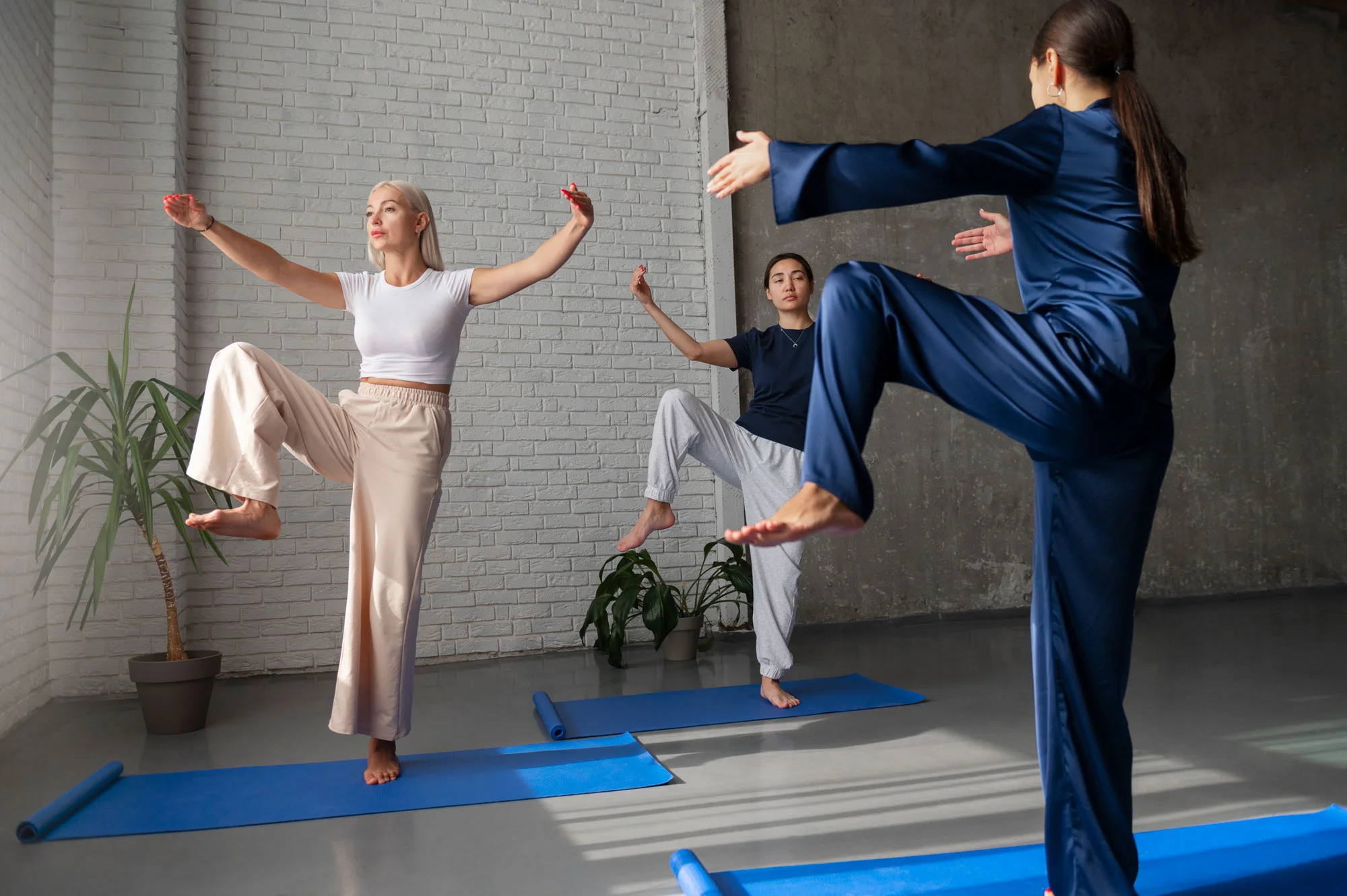
Among all martial arts, tai chi is especially powerful for improving flexibility and balance due to its slow, controlled, and flowing nature. It focuses on precision, breathing, and smooth transitions between movements.
For beginners, tai chi exercises for beginners provide a gentle entry point into martial arts training. Movements such as slow arm circles, controlled weight shifts, and continuous stepping patterns help develop both stability and mobility without strain.
Tai chi is particularly effective because it trains the body and mind together. Each movement requires focus, patience, and awareness, which enhances coordination and reduces stress at the same time.
Regular practice helps:
- Improve joint flexibility without impact stress
- Strengthen stabilizing muscles
- Enhance mental calmness and focus
- Support recovery from more intense training styles
Because of its low-impact nature, tai chi is often used alongside more dynamic martial arts training to create a balanced fitness routine.
Martial Arts for Fitness and Full-Body Control
Flexibility and balance do not exist in isolation—they are part of a larger fitness system. In martial arts for fitness, every movement contributes to overall physical conditioning.
Striking drills improve coordination, while footwork enhances agility. Defensive movements train reaction time and body control. Together, these elements create a complete system that develops strength, endurance, flexibility, and balance simultaneously.
Unlike traditional gym workouts that separate muscle groups, martial arts require full-body coordination. This integrated approach helps the body move more efficiently in both training and daily life.
Beginner-Friendly Flexibility and Balance Routine
Starting with a simple routine is the best way to build consistency without overwhelming the body. A martial arts-based flexibility and balance routine can be done at home with minimal space.
Warm-up (5–10 minutes):
Light movement such as walking in place, shoulder rolls, and gentle stretching prepares the body for mobility work.
Basic mobility drills (10–15 minutes):
Controlled leg swings, hip rotations, and slow arm movements help improve joint flexibility.
Balance training (10–15 minutes):
Single-leg stands, slow stance transitions, and controlled stepping improve stability and coordination.
Cool down (5–10 minutes):
Deep breathing combined with gentle stretching helps the body relax and recover.
This routine can be performed 3–5 times per week for noticeable improvements in flexibility and balance.
Common Mistakes by Beginners to Avoid
Many beginners slow their progress by making simple training mistakes that affect flexibility and balance development.
- Skipping warm-ups before training
- Forcing stretches instead of gradual improvement
- Ignoring proper posture during movements
- Training inconsistently without routine
- Rushing progress instead of building control
Avoiding these mistakes ensures safer and more effective long-term results.
Progression and Weekly Training Plan
As your flexibility and balance improve, training should gradually become more dynamic and controlled.
A simple weekly structure may include:
- Day 1: Mobility and flexibility focus
- Day 2: Balance and stance training
- Day 3: Tai chi flow practice
- Day 4: Rest or light movement
- Day 5: Combined martial arts drills
This balanced approach allows the body to adapt without overload while ensuring steady improvement over time.
Conclusion
Martial arts provide one of the most effective and sustainable ways to improve flexibility and balance. Unlike isolated fitness routines, they integrate movement, control, and awareness into every aspect of training.
Through consistent practice, martial arts for flexibility helps develop not only a stronger and more mobile body but also better coordination and stability in everyday life. Whether through dynamic movements or calming tai chi exercises for beginners, the benefits extend far beyond physical fitness.
When combined with broader principles of martial arts for fitness, flexibility and balance training becomes part of a complete system for long-term health, movement efficiency, and injury prevention. Over time, this leads to a more capable, confident, and well-conditioned body.
FAQ
- How do martial arts improve flexibility?
They use dynamic movements and controlled stretches that increase range of motion naturally over time. - Is martial arts good for balance training?
Yes, it constantly challenges stability through stances, footwork, and weight shifting. - Can beginners start martial arts for flexibility?
Absolutely, beginners can start with simple movements and gradually progress. - What is the best martial art for flexibility?
Tai chi is one of the best, especially for low-impact flexibility and balance training. - How often should I train for flexibility?
3–5 times per week is ideal for steady improvement. - Do I need equipment for martial arts flexibility training?
No, most exercises use bodyweight and require no equipment. - Can martial arts replace stretching routines?
Yes, because stretching is naturally integrated into movements. - How long before I see results?
Most people notice improvements in flexibility and balance within a few weeks of consistent practice.