Introduction
Tai chi, also known as tai chi chuan, is one of the most recognized forms of Chinese martial arts in the world today. Often described as “meditation in motion,” it blends slow, intentional movement with deep breathing and focused awareness. Alongside kung fu and other traditional Chinese combat systems, tai chi represents a powerful union of philosophy, health practice, and martial discipline.
From public parks in Beijing to wellness studios in New York and London, these ancient arts have become globally relevant. Today, about +300 million individuals practice Tai Chi globally. People practice tai chi for stress relief, balance, longevity, and mindful movement. Others train in kung fu for strength, speed, and self-defense. Some pursue both to experience the full spectrum of internal and external martial development.
This comprehensive guide will explore the foundations of tai chi and Chinese martial arts, explain their differences, outline their benefits, and help you understand how to begin safely and confidently. Consider this your central resource, the starting point for deeper exploration into specific techniques, training methods, and philosophies.
What Is Tai Chi?
Tai chi is a traditional internal martial art characterized by slow, continuous, and deliberate movements coordinated with breathing and mental focus. Although often perceived as a gentle wellness routine, its origins lie firmly in combat training and martial strategy.
The full name, tai chi chuan, translates to “Supreme Ultimate Fist.” The phrase “Supreme Ultimate” refers to the philosophical concept of dynamic balance between opposing forces. “Chuan” means fist or boxing method, signifying its martial nature. This dual identity, both philosophical and practical, is central to understanding tai chi.
In modern contexts, tai chi is frequently practiced for health, stress relief, and balance improvement. However, traditional training includes martial applications such as joint control, redirection of force, and structural defense. The slow speed used in practice is not a sign of weakness. Rather, it is a training method that develops internal coordination, structural integrity, and efficient power.
There are occasional online references to “tai tai chi,” usually as a search variation or repetition of the name. While not a formal term in traditional martial arts history, it typically refers back to tai chi itself. The correct terminology remains tai chi or tai chi chuan.
One of the most important clarifications for beginners is this: tai chi is not merely stretching, and it is not limited to seniors. It is a comprehensive internal martial art with applications that extend from self-defense principles to long-term health cultivation.
The Origins of Chinese Martial Arts
To fully understand tai chi, it is essential to view it within the larger framework of Chinese martial arts.
Historical Foundations
Chinese martial arts evolved over thousands of years. They were shaped by military combat methods, regional fighting systems, philosophical traditions, and monastic practices. Over time, different lineages developed distinct training methods, but most shared a common foundation rooted in discipline, structure, and the cultivation of both physical and internal strength.
These systems were not designed solely for fighting. They also served as tools for health preservation, character development, and spiritual refinement. The integration of martial skill with philosophical depth is one of the defining characteristics of Chinese martial arts.
Yin and Yang Philosophy
At the heart of these traditions lies the principle of yin and yang—the idea that opposing forces are interconnected and mutually dependent. Hard and soft, fast and slow, expansion and contraction all exist in dynamic balance.
In martial arts, this translates into a training methodology where tension and relaxation must be balanced. Excessive force creates rigidity. Excessive softness leads to instability. Mastery lies in maintaining equilibrium.
Tai chi embodies this principle in visible form. Movements alternate between expansion and contraction. Weight shifts between empty and full. Energy is neither forced nor suppressed, but directed efficiently.
Internal and External Systems
Chinese martial arts are often categorized into internal and external systems. While the distinction is sometimes oversimplified, it provides a useful framework.
External systems emphasize muscular strength, speed, and dynamic technique execution. Many forms of kung fu fall into this category, particularly those associated with Shaolin traditions.
Internal systems, such as tai chi chuan, focus on structural alignment, breath coordination, and the cultivation of internal power. Movements are often slower during training, allowing practitioners to refine subtle mechanics.
In reality, both internal and external arts develop strength and coordination. The difference lies primarily in training emphasis.
Where Kung Fu Fits
Kung fu is a broad term that refers to skill achieved through disciplined effort. In martial arts contexts, it encompasses a wide range of traditional Chinese combat systems.
Training often includes:
- Stance work
- Striking drills
- Forms practice
- Sometimes weapons training
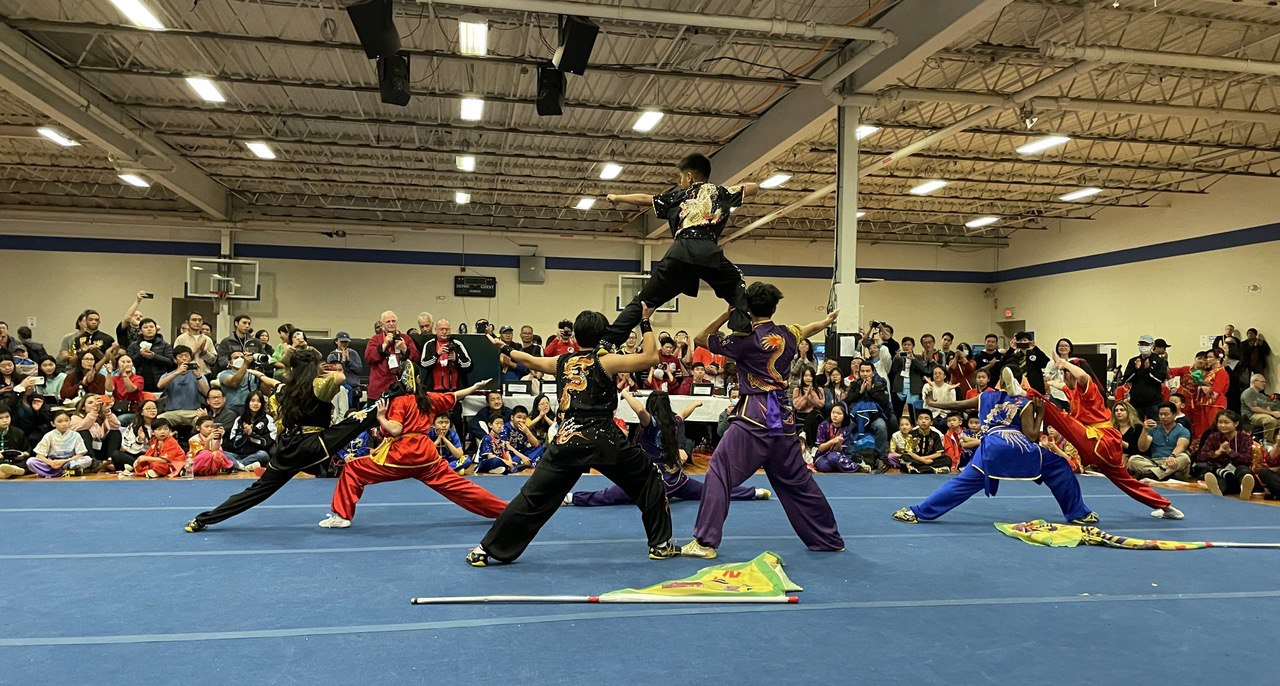
Kung fu training tends to be more physically intense and visually dynamic than tai chi. It develops speed, agility, and explosive power, while also requiring discipline and mental focus.
Beyond physical conditioning, kung fu also emphasizes repetition and refinement.
Students may spend months strengthening foundational stances before progressing to advanced techniques. This structured progression builds:
- Endurance
- Coordination
- Resilience
Many traditional schools also incorporate partner drills and controlled sparring to apply techniques in realistic scenarios.
While the external movements may appear forceful, proper kung fu training still demands relaxation, timing, and internal awareness. In this way, even external systems maintain a balance between strength and control, reflecting the broader philosophy found throughout Chinese martial arts.
Where Tai Chi Fits
Tai chi sits firmly within the internal martial arts tradition. Its training prioritizes:
- Balance
- Relaxed strength
- Structural alignment
- Sensitivity to force
While less aggressive in outward appearance than many kung fu systems, tai chi contains complete martial applications grounded in efficiency rather than brute strength.
Rather than meeting force with force, tai chi teaches practitioners to:
- Yield
- Redirect
- Neutralize incoming pressure
This approach develops refined body mechanics and heightened awareness of subtle shifts in balance.
Training often includes solo forms as well as partner exercises such as push hands, which cultivate timing and responsiveness. Over time, practitioners learn to generate power through coordinated whole-body movement rather than isolated muscle strength.
This internal emphasis allows tai chi to serve both as a martial discipline and a sustainable lifelong practice focused on health, stability, and controlled energy.
Different Styles of Tai Chi
Over centuries, tai chi developed into several primary styles. Each preserves core principles while expressing them differently.
As tai chi spread across regions and generations, individual families and masters refined the art according to their interpretations of structure, combat strategy, and internal development. These stylistic branches did not abandon the foundational philosophy of tai chi chuan, but rather emphasized different training qualities such as frame size, stepping patterns, tempo, and energy release. Understanding these variations helps practitioners appreciate that tai chi is not a single uniform sequence of movements, but a living martial tradition. Although health-focused practice is common today, each style retains martial depth rooted in classical Chinese martial arts principles, making stylistic exploration both educational and practical.
Yang Style
Yang style is the most widely practiced form of tai chi worldwide. It features:
- Large, open movements
- A steady, consistent pace
- Moderate stances suitable for beginners
Its accessible rhythm contributes to its popularity in community classes and wellness programs.
Yang style emphasizes:
- Relaxation with structural integrity
- Proper alignment
- Coordinated whole-body movement
The unhurried tempo allows refinement of posture and breathing. Although it avoids sudden bursts of force, traditional long forms retain complete martial applications, demonstrating how calm, expansive movement can express both health benefits and practical defensive principles.
Chen Style
Chen style is considered the oldest known form of tai chi. It alternates between:
- Slow, flowing sequences
- Sudden bursts of explosive energy
Lower stances and dynamic transitions build:
- Strength
- Mobility
- Endurance
A defining characteristic is spiraling, coiling actions known as silk-reeling energy, which develop coordinated whole-body power. Explosive releases, called fa jin, are integrated into the form, teaching seamless shifts from softness to power.
Chen style clearly reflects its martial roots while maintaining internal development, appealing to practitioners who seek both athletic challenge and visible martial expression.
Wu Style
Wu style is distinguished by:
- Smaller frame movements
- Subtle internal mechanics
- An upright yet slightly inclined posture
Its compact range of motion requires:
- Careful balance
- Precise weight distribution
- Disciplined control
Rather than emphasizing large gestures, Wu style focuses on efficiency, alignment, and internal sensitivity. Practitioners generate power through coordinated timing and structural refinement rather than outward amplitude.
Though movements may appear simple, the technical precision demands sustained concentration, appealing to those who value detailed internal development within tai chi chuan.
Sun Style
Sun style is known for:
- Agile stepping patterns
- Higher stances
- Smooth, continuous transitions
It often uses a forward-follow stepping method that promotes fluid movement. Because of its moderate physical demands, it is frequently recommended for:
- Older practitioners
- Those seeking a gentler introduction
Influences from other internal martial arts contribute to its distinctive rhythm and mobility. Higher stances reduce knee strain while maintaining structural awareness.
Despite its softer appearance, Sun style preserves internal connection, breath coordination, and mindful practice, supporting longevity in training.
While these styles differ in appearance, tempo, and expression, they share the same foundational principles that define tai chi chuan within Chinese martial arts. Each cultivates rooted balance, coordinated breath, structural alignment, and efficient movement. Whether expansive or compact, steady or explosive, the goal remains the same: harmonizing body and mind through disciplined practice. No style is inherently superior; each offers a distinct pathway into the same underlying philosophy. The best choice depends on individual goals, physical condition, and personal resonance. What matters most is consistent training, as all authentic styles preserve the martial depth and lifelong health benefits that make tai chi a living, enduring art.
Tai Chi vs Kung Fu vs Other Martial Arts
Understanding the differences between tai chi, kung fu, and other martial systems helps practitioners choose a path aligned with their goals. For a more focused breakdown, readers often explore detailed comparisons such as kung fu vs tai chi, but a foundational understanding begins here.
Intensity and Training Pace
Kung fu training is typically high intensity. It incorporates dynamic drills, conditioning exercises, and fast combinations. Physical exertion is often immediate and demanding.
Tai chi training progresses more gradually. Movements are slow and controlled, with emphasis on structural refinement rather than muscular force.
Other martial arts, such as karate or taekwondo, often focus on linear strikes and defined forms, differing stylistically from both kung fu and tai chi.
In practical terms, this difference in pace influences how the body adapts over time. High-intensity training builds rapid strength and stamina but may require longer recovery. Tai chi’s measured tempo allows practitioners to train consistently with minimal strain, supporting gradual improvement in coordination, posture, and breath control without overwhelming the nervous system.
Purpose and Application
Kung fu prioritizes combat effectiveness and athletic conditioning. It develops speed, coordination, and striking power.
Tai chi integrates martial principles with long-term health cultivation. While it includes self-defense applications, its training approach prioritizes internal development and efficiency.
Many practitioners find that tai chi supports longevity, while kung fu satisfies those seeking dynamic physical challenge.
The difference in purpose also shapes classroom structure. Kung fu sessions may include impact training, partner drills, and performance-oriented routines. Tai chi classes often focus on form repetition, balance work, and sensitivity exercises. Both paths are rooted in discipline, yet their day-to-day training experiences can feel significantly different.
Health and Longevity
Tai chi is widely associated with balance improvement, joint-friendly movement, and stress reduction. Kung fu builds strength, endurance, and explosive power.
Each discipline offers benefits, but their methods differ. Some individuals eventually study both to gain a balanced martial education.
From a long-term perspective, tai chi’s low-impact design makes it sustainable for decades, especially for individuals prioritizing joint health and nervous system regulation. Kung fu’s conditioning elements support bone density, muscular strength, and cardiovascular performance. Together, they demonstrate how Chinese martial arts can address both restorative wellness and peak physical conditioning.
Suitability
Tai chi is accessible to a broad age range and fitness level. Kung fu may be more physically demanding, particularly in traditional schools.
The choice depends on individual goals, whether one seeks meditative movement, athletic challenge, or comprehensive martial training.
Lifestyle and temperament also play a role. Those who enjoy structured intensity and visible physical progression may gravitate toward kung fu. Individuals seeking mindful movement, stress management, or gentle yet disciplined exercise often prefer tai chi. Ultimately, the most suitable art is the one that encourages consistent, long-term practice.
Comparative Overview of Training Approaches
| Category | Tai Chi | Kung Fu | Other Martial Arts (e.g., Karate, Taekwondo) |
| Training Pace | Slow, controlled, continuous | Fast, dynamic, explosive | Moderate to fast, often linear and structured |
| Primary Focus | Internal coordination, balance, breath | Strength, speed, combat conditioning | Striking precision, competitive structure |
| Physical Intensity | Low to moderate | Moderate to high | Moderate to high |
| Movement Style | Circular, flowing, weight-shifting | Varied: circular and linear | Often linear with defined forms |
| Self-Defense Approach | Redirection and structural control | Direct strikes, combinations, sparring | Defined techniques, rule-based sparring |
| Accessibility | Suitable for most ages and fitness levels | Physically demanding in traditional schools | Depends on style and training intensity |
| Long-Term Sustainability | Designed for lifelong practice | Sustainable with conditioning | Varies by discipline and training method |
| Health Emphasis | Balance, joint health, nervous system regulation | Strength, endurance, agility | Fitness, discipline, coordination |
Key Benefits of Tai Chi and Chinese Martial Arts
The enduring popularity of tai chi and other Chinese martial arts stems from their multidimensional benefits.
Physical Benefits
Regular practice enhances coordination, muscular endurance, and postural alignment. Tai chi in particular strengthens stabilizing muscles while minimizing joint strain. Over time, practitioners often experience improved mobility and smoother movement patterns. Tai chi’s gentle, controlled movements not only support joint health and mobility but also improve balance.
Kung fu training builds cardiovascular endurance and explosive strength. Both disciplines enhance body awareness and structural efficiency.
Mental Clarity and Focus
Tai chi requires sustained attention. Each transition must be deliberate and controlled. This continuous focus cultivates mental clarity and presence.
Kung fu similarly sharpens reflexes and strategic thinking through dynamic drills and sparring scenarios.
Stress Relief
The combination of controlled breathing and rhythmic movement in tai chi encourages nervous system regulation. Practitioners frequently report improved sleep and reduced anxiety.
The structured discipline of martial arts training can also provide psychological resilience and emotional stability.
Balance and Flexibility
Tai chi’s slow weight shifts strengthen stabilizing muscles and improve proprioception. Flexibility develops gradually through consistent range-of-motion practice.
For individuals concerned about injury prevention, these benefits are particularly significant.
Benefits for Aging Adults
Tai chi is often recommended for aging populations because of its gentle yet effective training method. It supports fall prevention, joint health, and cognitive engagement without excessive strain. Research shows that older adults who participated in a 12-week tai chi program experienced measurable improvements in lower-extremity flexibility and physical function.
The adaptable nature of tai chi allows modifications for different physical conditions, making it sustainable over decades.
Tai Chi for Beginners: How to Start
Beginning tai chi does not require an athletic background or prior martial arts experience. Proper guidance through structured tai chi lessons for beginners ensures that movements are learned safely and effectively. Many new students start with simplified tai chi exercises, focusing on posture, weight shifting, and smooth, intentional transitions.
What to Expect in Your First Class
A typical introductory session begins with gentle warm-up movements followed by instruction in foundational stances and coordinated arm patterns. Students learn how to shift weight smoothly and maintain upright posture.
Structured tai chi lessons provide supervised instruction, ensuring that foundational alignment and breathing mechanics are correct from the start.
Foundational Movements
Beginners often start with simplified sequences before learning complete forms. These introductory drills may include basic weight shifts, coordinated arm circles, and posture refinement exercises.
Guided tai chi exercises for beginners focus on building stability, improving alignment, and developing slow, intentional transitions.
Practice Frequency
Consistency is more important than duration. Practicing several times per week allows movements to become natural and integrated. Progress in tai chi is gradual, and patience is central to mastery.
Practicing Tai Chi at Home
Once foundational instruction is established, home practice becomes a critical component of development. Incorporating tai chi home exercises into daily routines reinforces structural alignment and smooth transitions. Practicing these exercises regularly helps beginners internalize form and rhythm, making progression in classes more effective.
Even brief sessions can deepen familiarity with movement patterns. Consistency helps internalize rhythm and coordination. However, self-practice should complement, not replace, occasional instructor feedback. Proper form ensures that habits remain aligned with traditional principles. Practitioners should choose a quiet space, wear comfortable clothing, and move within a safe range of motion. Gradual repetition builds both confidence and technical precision.
Over time, steady home practice strengthens muscle memory and deepens awareness of subtle weight shifts and posture adjustments. A calm environment supports concentration, allowing movements to remain deliberate and controlled. Even short, focused sessions contribute meaningfully to long-term progress and overall technical refinement.
Tai Chi for Seniors: Safe and Gentle Practice
Tai chi’s accessibility makes it especially suitable for seniors.
Low-Impact Movement
The slow and continuous nature of tai chi minimizes joint stress. Movements can be performed at comfortable heights without deep stances.
Because there are no abrupt impacts or rapid directional changes, the body is allowed to move in a controlled and stable manner. This makes tai chi particularly supportive for individuals managing arthritis or reduced mobility. The emphasis on smooth transitions encourages circulation and muscular engagement without placing excessive strain on vulnerable joints.
Fall Prevention
Carefully controlled weight transfers improve balance awareness. Over time, this reduces the likelihood of falls.
By repeatedly shifting weight from one leg to the other in a deliberate way, practitioners strengthen stabilizing muscles in the hips and legs. Tai chi also improves proprioception—the body’s ability to sense position in space—which is critical for maintaining stability during daily activities such as walking, climbing stairs, or turning.
Joint and Mobility Support
Circular motions gently mobilize ankles, knees, hips, and shoulders. Consistent practice may help maintain flexibility and coordination.
Unlike static stretching, tai chi integrates movement with weight-bearing structure, supporting functional mobility rather than isolated flexibility. The coordinated patterns promote smoother joint articulation and muscular balance. Over time, this steady repetition can contribute to improved posture and more confident movement in everyday life.
Safety remains important. Beginners should start gradually, avoid forcing movements, and consult healthcare professionals if necessary.
Mastering Tai Chi Techniques: Posture, Flow and Discipline
As practitioners advance, attention shifts from memorizing sequences to refining quality.
Alignment
Proper alignment begins with an upright spine, relaxed shoulders, and softly bent knees. Small structural adjustments can dramatically influence balance and efficiency.
Correct alignment allows force to travel through the body without obstruction. When posture is properly stacked, movements require less muscular strain and feel more stable. Over time, improved alignment supports better posture outside of practice as well, influencing how practitioners stand, walk, and carry themselves in daily life.
Breath Coordination
Breathing should remain natural and synchronized with expansion and contraction. Forced breathing disrupts flow and creates tension.
As technique improves, practitioners become more aware of how breath influences rhythm and internal stability. Coordinated breathing enhances relaxation and supports smoother transitions between movements. Rather than controlling the breath aggressively, tai chi encourages subtle regulation, allowing inhalation and exhalation to complement physical motion.
Smooth Transitions
Tai chi emphasizes continuity. Movements should connect seamlessly without abrupt stops. Flow reflects internal coordination.
Each posture should emerge from the previous one without visible interruption. This continuity trains the nervous system to remain calm and responsive rather than reactive. When transitions are smooth, energy remains consistent throughout the sequence, reinforcing balance, timing, and whole-body integration.
Discipline and Long-Term Commitment
Chinese martial arts demand patience. Skill develops through repetition and humility. Progress is subtle but cumulative.
Improvement in tai chi often appears gradual, yet consistent practice produces meaningful change over time. Dedicated repetition refines awareness, strengthens structure, and deepens understanding of internal mechanics. Commitment to steady training transforms isolated techniques into embodied skill.
Dedicated practice transforms tai chi from a simple routine into a lifelong discipline.
Conclusion
Tai chi and the broader world of Chinese martial arts represent enduring traditions that integrate physical training, philosophical depth, and disciplined practice. Whether one chooses the dynamic intensity of kung fu or the refined internal focus of tai chi chuan, these systems offer pathways toward improved health, balance, and resilience.
Tai chi, in particular, stands out as a sustainable lifelong practice. Its principles of efficiency, structural awareness, and mindful movement extend beyond the training space into daily life.
This guide has established the foundational knowledge necessary to understand tai chi and its place within Chinese martial arts. From here, readers can explore more specialized topics, including detailed style comparisons, structured beginner programs, technique refinement, and practical applications.
By approaching practice with patience, consistency, and dedication, tai chi becomes more than exercise, it becomes a way of harmonizing body, mind, and spirit, rooted in centuries of tradition and adaptable to modern life.
FAQ
1. What is tai chi?
Tai chi is a traditional Chinese internal martial art that combines slow, deliberate movement with breathing and mental focus.
2. Is tai chi only for seniors?
No, tai chi is suitable for all ages and can be adapted to different fitness levels.
3. What is the difference between tai chi and kung fu?
Tai chi emphasizes internal development and slow training, while kung fu focuses on dynamic power, speed, and external conditioning.
4. How often should beginners practice tai chi?
Beginners should aim to practice two to four times per week for steady progress.
5. Does tai chi have self-defense applications?
Yes, tai chi includes joint control, redirection of force, and structural defense principles.
6. Which tai chi style is best for beginners?
Yang style is often recommended due to its steady pace and accessible movements.
7. Can tai chi improve balance?
Yes, its controlled weight shifts strengthen stabilizing muscles and enhance coordination.
8. Is tai chi a good stress-relief practice?
Yes, its rhythmic movement and breath coordination support relaxation and nervous system regulation.
9. Do I need special equipment to start tai chi?
No, comfortable clothing and a quiet space are typically sufficient.10. How long does it take to see results from tai chi?
Many practitioners notice improvements in balance and relaxation within a few weeks of consistent practice