Introduction
Tai chi is often described as “meditation in motion,” but achieving that smooth, flowing quality takes practice and attention to detail. Many beginners focus on learning movements but overlook one of the most important aspects of the practice, posture and flow.
Mastering posture and flow is what transforms simple movements into effective tai chi practice. Without proper alignment and smooth transitions, the benefits of tai chi, such as balance, relaxation, and coordination, are significantly reduced.
The good news is that you don’t need a studio to improve. With the right tai chi posture and flow tips, you can refine your technique at home through consistent and mindful practice. By combining simple tai chi home exercises with focused posture awareness, beginners can gradually develop smooth, controlled movement.
In this guide, we’ll walk through practical, step-by-step strategies to help you improve posture, build fluid movement, and get the most out of your tai chi exercises for beginners at home.
Why Posture and Flow Matter in Tai Chi
Posture and flow are the foundation of tai chi. They determine how effectively the body moves and how well energy circulates throughout the practice.
Posture Supports Stability
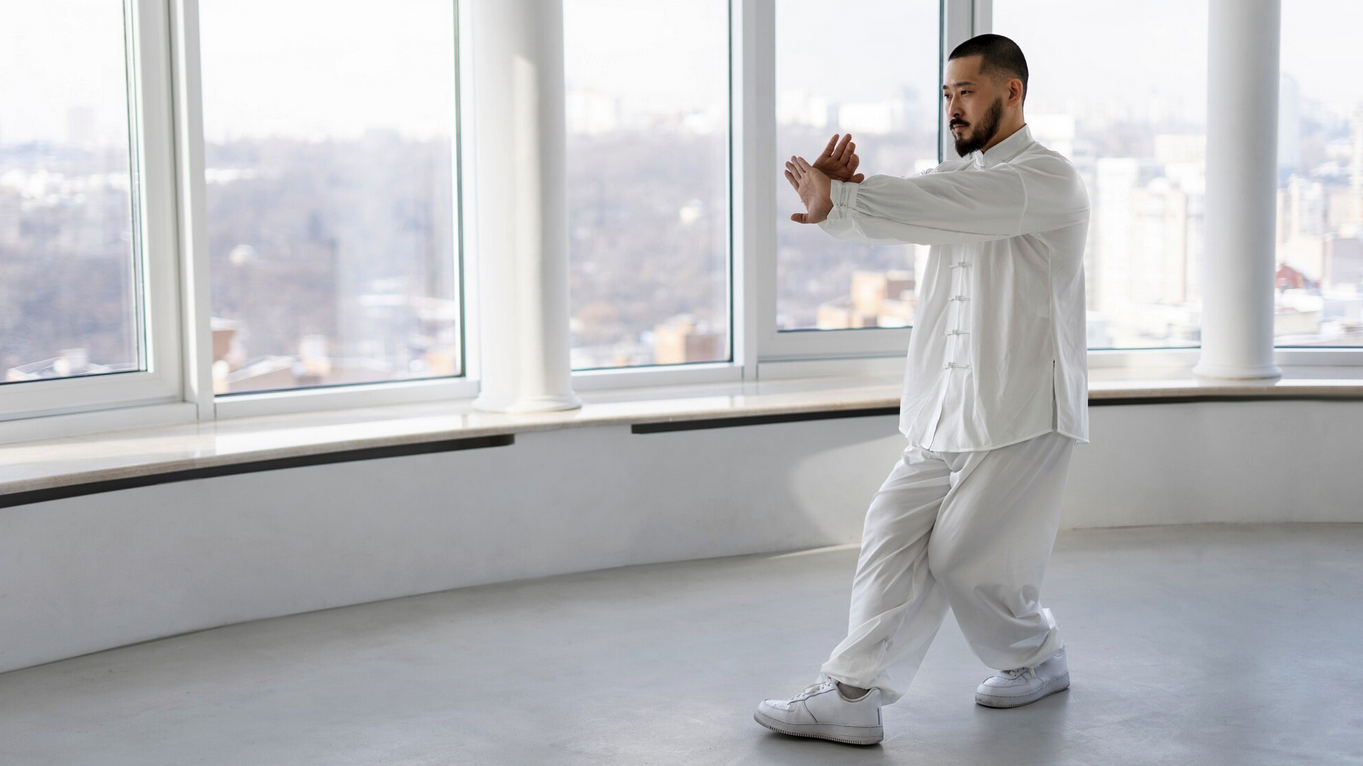
Proper posture keeps the body balanced and aligned. When the spine is upright and the weight is evenly distributed, movements feel more stable and controlled.
Flow Creates Continuity
Flow refers to the smooth connection between movements. Instead of stopping between positions, tai chi encourages continuous motion, where one movement naturally transitions into the next.
Mind-Body Coordination
When posture and flow are aligned, the body and mind work together more efficiently. This improves focus, reduces tension, and enhances the overall experience of tai chi practice.
Practicing with correct posture and flow ensures that your tai chi home exercises are both safe and effective.
Step-by-Step Tai Chi Posture and Flow Tips
The following tai chi posture and flow tips will help you build a strong foundation while practicing at home.
- Establish a Strong Starting Posture
Every tai chi movement begins with proper alignment.
How to Do It
- Stand with feet shoulder-width apart
- Keep your knees slightly bent
- Relax your shoulders
- Let your arms hang naturally
- Keep your head aligned with your spine
Why It Matters
A strong starting posture creates balance and stability. It allows you to move freely without losing control or placing strain on your joints.
This is one of the most important steps in all tai chi exercises for beginners.
- Keep Movements Slow and Controlled
Tai chi is not about speed. It is about control and awareness.
How to Practice
- Move slowly from one position to another
- Avoid sudden or jerky motions
- Focus on maintaining balance throughout
Why It Matters
Slow movements allow your body to adjust and stay stable. They also improve concentration and help you develop better coordination.
When practicing tai chi home exercises, slowing down your movements will significantly improve your flow.
- Shift Weight Smoothly
Weight shifting is a key element of tai chi flow.
How to Practice
- Shift your weight gradually from one leg to the other
- Keep your movements controlled
- Avoid leaning forward or backward
Why It Matters
Smooth weight shifting improves balance and stability. It also helps connect movements, making transitions more fluid.
This technique is essential for mastering tai chi posture and flow tips effectively.
- Relax Without Losing Structure
Tai chi requires a balance between relaxation and control.
How to Practice
- Keep muscles relaxed but engaged
- Avoid stiffness in the shoulders and arms
- Maintain posture without tension
Why It Matters
Relaxation allows energy to flow naturally through the body. At the same time, maintaining structure prevents collapse or imbalance.
This balance is what gives tai chi its unique combination of softness and strength.
- Coordinate Breath with Movement
Breathing plays a central role in tai chi flow.
How to Practice
- Inhale during upward or opening movements
- Exhale during downward or closing movements
- Keep breathing slow and natural
Why It Matters
Coordinating breath with movement enhances relaxation and focus. It also helps maintain a steady rhythm during practice.
Many beginners improve quickly by focusing on breathing during tai chi exercises for beginners.
- Connect Movements without Stopping
Flow means continuous movement.
How to Practice
- Move from one posture directly into the next
- Avoid pausing between movements
- Keep transitions smooth and connected
Why It Matters
Continuous movement creates the flowing quality that defines tai chi. It also improves coordination and helps maintain balance.
This is one of the most valuable tai chi posture and flow tips for developing a natural rhythm.
Simple Tai Chi Home Exercises to Improve Flow
To apply these tips, you can practice a few basic tai chi home exercises.
Opening Movement
- Raise your arms slowly while inhaling
- Lower them while exhaling
- Focus on posture and smooth movement
Weight Shift Exercise
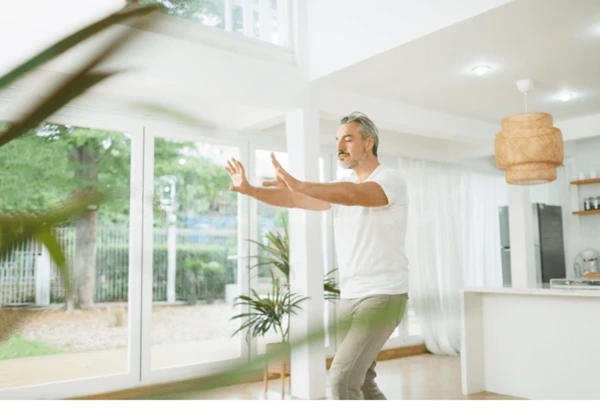
- Shift weight from one leg to the other
- Maintain balance and upright posture
- Keep transitions slow and controlled
Arm Flow Exercise
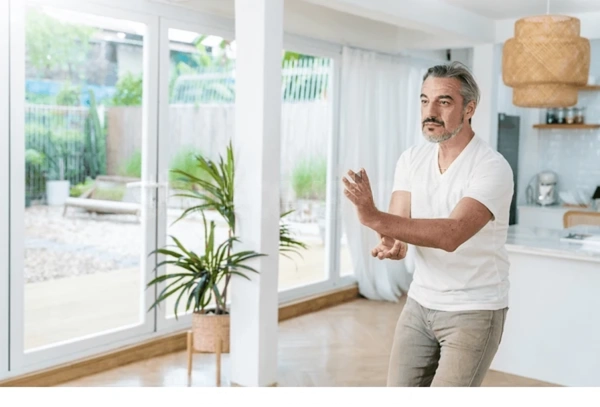
- Move arms in circular patterns
- Keep shoulders relaxed
- Coordinate movement with breathing
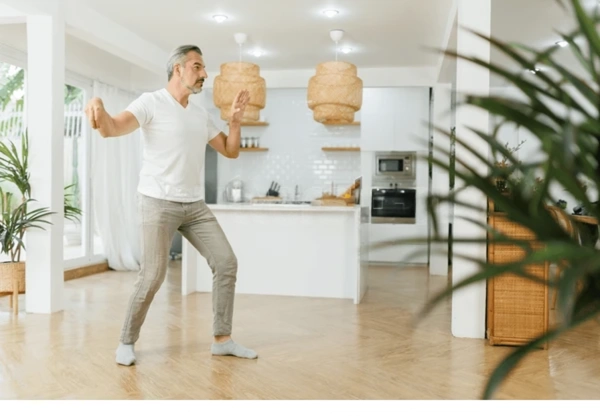
Creating a Daily Practice Routine
Consistency is key when learning tai chi at home.
Start Small
Begin with 10–15 minutes of practice. Focus on posture and flow rather than completing many movements.
Practice in a Calm Space
Choose a quiet area where you can move freely without distractions.
Repeat Basic Movements
Repeating simple tai chi exercises for beginners helps build muscle memory and improve coordination.
Stay Consistent
Daily practice is more effective than occasional long sessions. Regular repetition leads to steady improvement.
Top Tai Chi Mistakes Beginners Should Avoid
Beginners often struggle with posture and flow due to simple mistakes.
Moving Too Fast
Rushing through movements reduces control and balance. Moving quickly prevents the body from adjusting properly to each position, increasing the risk of losing stability. Slowing down allows you to stay aware of posture, maintain coordination, and improve overall movement quality.
Holding Tension
Tight shoulders and stiff arms interrupt the flow of movement. Tension restricts natural motion and can lead to discomfort over time. Keeping the body relaxed helps movements feel lighter, smoother, and more connected, improving both flow and efficiency.
Poor Alignment
Leaning forward or collapsing posture reduces stability. Incorrect alignment places unnecessary strain on the joints and weakens balance. Maintaining an upright posture ensures even weight distribution and allows movements to remain controlled and stable.
Ignoring Breathing
Breathing irregularly can disrupt rhythm and reduce relaxation. Breath plays a key role in maintaining flow and focus during practice. Coordinating breathing with movement helps create a steady rhythm and supports a calm, relaxed state of mind.
Avoiding these mistakes will help you apply tai chi posture and flow tips more effectively.
Tips to Enhance Your Tai Chi Practice Over Time
Mastering tai chi posture and flow takes time, but progress becomes noticeable with consistent practice.
As your movements improve, you will experience:
- smoother transitions
- better balance
- increased relaxation
- stronger coordination
Over time, simple tai chi home exercises will begin to feel natural, and your overall movement quality will improve.
Conclusion
Mastering posture and flow is essential for effective tai chi practice. By applying the right tai chi posture and flow tips, beginners can transform simple movements into a smooth, coordinated sequence that enhances both physical and mental wellbeing.
Practicing regularly at home through tai chi home exercises helps reinforce these principles and build confidence. Even basic tai chi exercises for beginners can lead to noticeable improvements when performed with proper alignment and control.
With patience, consistency, and mindful practice, tai chi becomes more than a series of movements, it becomes a flowing, balanced practice that supports long-term health and inner calm.
FAQ
- What are tai chi posture and flow tips?
They are techniques that help improve alignment, movement quality, and coordination in tai chi practice. - Can I practice tai chi at home?
Yes, simple tai chi home exercises are effective for beginners practicing independently. - How long should I practice tai chi daily?
10–20 minutes of daily practice is enough for beginners. - Why is posture important in tai chi?
Proper posture improves balance, stability, and movement efficiency. - How can I improve tai chi flow?
By practicing slow, continuous movements without stopping between transitions. - Are tai chi exercises for beginners difficult?
No, they are simple and designed to be practiced slowly and comfortably. - Does breathing affect tai chi practice?
Yes, breathing helps maintain rhythm, relaxation, and focus. - What is the biggest mistake beginners make?
Moving too quickly and ignoring posture alignment. - How long does it take to improve posture and flow?
With consistent practice, noticeable improvement can occur within a few weeks. - Can tai chi help reduce stress?
Yes, tai chi promotes relaxation and improves mental clarity.