Chinese martial arts have fascinated practitioners around the world for centuries. Among the most recognized disciplines are Tai Chi Chuan and Kung Fu. While both share historical roots and philosophical foundations, they differ significantly in training style, intensity, and overall purpose.
When exploring tai chi chuan vs kung fu, beginners often wonder which martial art best fits their goals. Some people seek calm, mindful movement for health and balance, while others prefer physically demanding training that builds strength, speed, and self-defense skills.
Both arts belong to the broader tradition of Chinese martial arts, where physical discipline is closely connected with philosophy and personal development. Understanding their differences can help you choose a practice that aligns with your lifestyle, interests, and fitness level.
This guide compares tai chi chuan vs kung fu in terms of training approach, movement style, health benefits, and beginner suitability.
Understanding Tai Chi Chuan
Tai chi chuan, commonly shortened to tai chi, is a traditional internal martial art known for slow, flowing movements combined with controlled breathing and mental focus.
Originally developed as a combat system, tai chi emphasizes efficiency, balance, and the redirection of force rather than direct resistance. Over time, it also became widely practiced for its health and wellness benefits.
Within the broader world of Chinese martial arts, tai chi developed into several styles, including Yang, Chen, Wu, and Sun. While these styles differ in posture and pacing, they all share the same internal principles of balance, relaxation, and coordinated movement.
Key Characteristics of Tai Chi Chuan
Tai chi practice emphasizes several core elements:
- Slow, continuous movement
- Relaxed but stable posture
- Controlled breathing
- Smooth weight shifting
- Focused mental awareness
Instead of relying on muscular force, practitioners learn to generate power through coordinated whole-body movement. Training often includes solo forms, posture exercises, and partner drills that develop sensitivity and balance.
Understanding Kung Fu
Kung fu is a broad term used to describe many traditional Chinese fighting systems. Unlike tai chi, which focuses on internal mechanics, kung fu training usually emphasizes strength, speed, and striking techniques.
The phrase “kung fu” actually refers to skill developed through consistent practice and dedication. In martial arts contexts, it describes systems that combine combat techniques with physical conditioning.
Key Characteristics of Kung Fu Training
Although kung fu styles vary widely, most share several training elements:
- Strong stances and footwork
- Punching and kicking techniques
- Structured forms or routines
- Strength and endurance training
- Partner drills and sparring
Compared with tai chi, kung fu movements are typically faster and more explosive. Students often repeat techniques many times to develop speed, coordination, and striking power.
Tai Chi Chuan vs Kung Fu: Key Differences
Although both arts originate from the same cultural tradition, several important differences distinguish tai chi chuan vs kung fu.
Training Intensity
One of the most noticeable differences is training intensity.
Tai chi movements are slow and controlled. Practitioners move gradually from one posture to another while maintaining relaxed breathing and stable balance.
Kung fu training is generally more physically demanding. Classes often include dynamic drills, stance training, and conditioning exercises designed to build strength and endurance.
For this reason, kung fu often feels like a high-energy workout, while tai chi focuses more on coordination and internal control.
Movement Style
Movement style is another clear difference between the two disciplines.
Tai chi movements are circular, smooth, and continuous. Practitioners shift their weight slowly while maintaining steady posture and controlled breathing.
Kung fu techniques are typically sharper and more direct. Many styles include powerful punches, kicks, jumps, and quick changes in direction.
Although both arts require coordination and discipline, their visual expression is quite different.
Training Focus
Another important factor in kung fu vs tai chi is the primary focus of training.
Tai chi focuses on:
- Balance and body awareness
- Internal coordination
- Efficient movement
- Relaxed strength and posture
Kung fu training emphasizes:
- Speed and agility
- Muscular strength
- Combat techniques
- Physical conditioning
Because of these differences, tai chi is often associated with wellness programs, while kung fu is commonly practiced as an athletic martial art.
Self-Defense Approach
Both tai chi and kung fu originated as combat systems, but their methods differ.
Kung fu generally uses direct techniques such as punches, kicks, and blocks to counter an opponent.
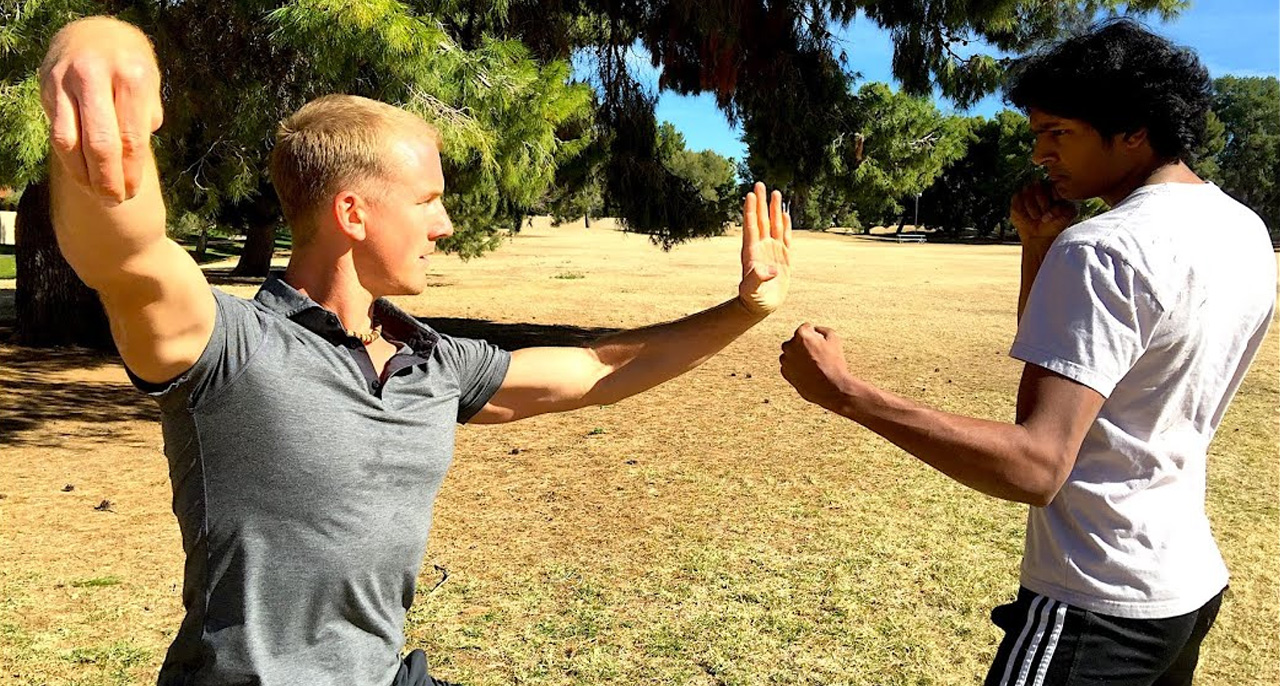
Tai chi emphasizes redirecting incoming force rather than confronting it directly. Practitioners learn to neutralize attacks using balance, timing, and leverage.
Although tai chi’s martial applications may appear subtle, advanced practitioners can apply these principles effectively in self-defense situations.
Health Benefits: Tai Chi vs Kung Fu
Both martial arts provide valuable health benefits, though they support the body in different ways.
Benefits of Tai Chi
Tai chi is widely known for promoting overall wellness.
Regular practice can help:
- Improve balance and coordination
- Reduce stress and anxiety
- Increase flexibility and mobility
- Strengthen stabilizing muscles
- Encourage mental relaxation
Because movements are gentle and low-impact, tai chi can be practiced by people of many ages and fitness levels.
Benefits of Kung Fu Training
Kung fu training offers a more intense form of physical conditioning.
Common benefits include:
- Increased muscular strength
- Improved cardiovascular fitness
- Greater agility and speed
- Enhanced endurance
- Improved reflexes and coordination
For individuals who enjoy energetic exercise and martial skill development, kung fu training can provide a rewarding challenge.
Which Martial Art Is Better for Beginners?
When comparing tai chi chuan vs kung fu, beginners often ask which martial art is easier to start.
Tai chi is generally more accessible because its movements are slow and controlled. The training pace allows beginners to gradually develop balance, posture, and coordination.
Kung fu can also be beginner-friendly, but early training often includes stance practice and conditioning exercises that require more physical effort.
People seeking a calm and mindful form of exercise may feel more comfortable starting with tai chi. Those who prefer energetic workouts and learning striking techniques may find kung fu more appealing.
Choosing the Right Martial Art for Your Goals
The choice between tai chi and kung fu ultimately depends on your goals and preferences.
Tai Chi May Be Right for You If You Want
- Gentle, low-impact exercise
- Improved balance and posture
- Stress relief and relaxation
- Mindful movement and breathing
- A long-term wellness practice
Many people incorporate tai chi into their lifestyle as a way to support both physical and mental well-being.
Kung Fu May Be a Better Choice If You Prefer
- High-energy training sessions
- Strength and athletic conditioning
- Learning striking techniques
- Developing endurance and agility
- A physically demanding martial arts practice
Kung fu training often appeals to individuals who enjoy structured physical challenges.
Conclusion
When comparing tai chi chuan vs kung fu, both martial arts offer unique benefits and training experiences.
Tai chi emphasizes balance, internal coordination, and mindful movement. Its slow and gentle practice makes it accessible to people of many ages and fitness levels.
Kung fu training focuses on strength, speed, and dynamic techniques. It provides a physically demanding workout that develops endurance and martial skill.
Neither discipline is inherently better than the other. The best choice depends on your personal goals, fitness level, and preferred training style.
Whether you choose the calm flow of tai chi or the energetic intensity of kung fu, both paths offer meaningful ways to explore the traditions of Chinese martial arts while improving physical health and personal discipline.
FAQ
- What is the main difference between Tai Chi Chuan vs Kung Fu?
Tai Chi focuses on slow internal energy and balance, while Kung Fu emphasizes faster, external combat techniques and physical conditioning. - Is Tai Chi Chuan easier to learn than Kung Fu?
Yes, Tai Chi is generally easier for beginners because it uses slow movements and low-impact training. - Which martial art is better for self-defense, Tai Chi or Kung Fu?
Kung Fu is typically more practical for direct self-defense because of its combat-focused techniques. - Can Tai Chi Chuan be used as a martial art?
Yes, Tai Chi is a traditional Chinese martial art with applications such as push hands and internal power techniques. - Is Kung Fu more physically demanding than Tai Chi?
Yes, Kung Fu training usually involves intense drills, strength work, and dynamic movements. - Which martial art is better for health and relaxation?
Tai Chi is widely practiced for stress relief, balance improvement, and overall health benefits. - Are Tai Chi and Kung Fu part of Chinese martial arts?
Yes, both Tai Chi Chuan and Kung Fu are important systems within traditional Chinese martial arts. - Can beginners start Kung Fu training without prior experience?
Yes, beginners can start Kung Fu training, but it often requires greater physical effort and discipline. - Is Tai Chi suitable for older adults or people with limited mobility?
Yes, Tai Chi is gentle, low-impact, and commonly recommended for seniors and rehabilitation. - Should you choose Tai Chi or Kung Fu for long-term practice?
The choice depends on your goals, whether you prefer meditation and balance or intense martial arts training.